In today's dynamic digital landscape, email marketing and affiliate marketing stand out as two powerful strategies for increasing online visibility, attracting leads and boosting conversions.
Although different in approach, these two mechanisms can be significant catalysts for the growth of your online business when used effectively.
Email marketing involves sending targeted electronic messages to a group of people who have shown an interest in your brand or products. This strategy is customizable and measurable, offering valuable insights into consumer behavior. Email marketing campaigns can be used to inform subscribers of new products, offer exclusive promotions, and ultimately encourage engagement and repeat purchases.
Affiliate marketing, on the other hand, involves a collaboration between a company and affiliates - individuals or companies who promote the company's products or services on their online platforms. In return, these affiliates receive a commission for every sale, click or lead generated via their affiliate links. This creates a win-win situation where companies increase their reach and sales, while affiliates are rewarded for their promotion.
Although distinct, email marketing and affiliate marketing can be synergistic. Affiliates can use email marketing to effectively promote the products and services they are associated with, combining the power of both strategies. Companies can also integrate affiliate links into their emails to maximize reach and conversions.
Email marketing and affiliate marketing are two valuable tools in the digital marketing arsenal. When applied wisely and ethically, they can not only increase brand awareness and sales, but also strengthen relationships with customers and partners. By understanding and exploiting these strategies, marketers and entrepreneurs can successfully navigate the competitive world of online commerce and realize their full growth potential.
How to effectively integrate email marketing📨 into an affiliate marketing💰 strategy?
In the dynamic world of digital marketing, the judicious integration of email marketing into an affiliate marketing strategy can be a powerful catalyst for increasing reach, engagement and conversions.
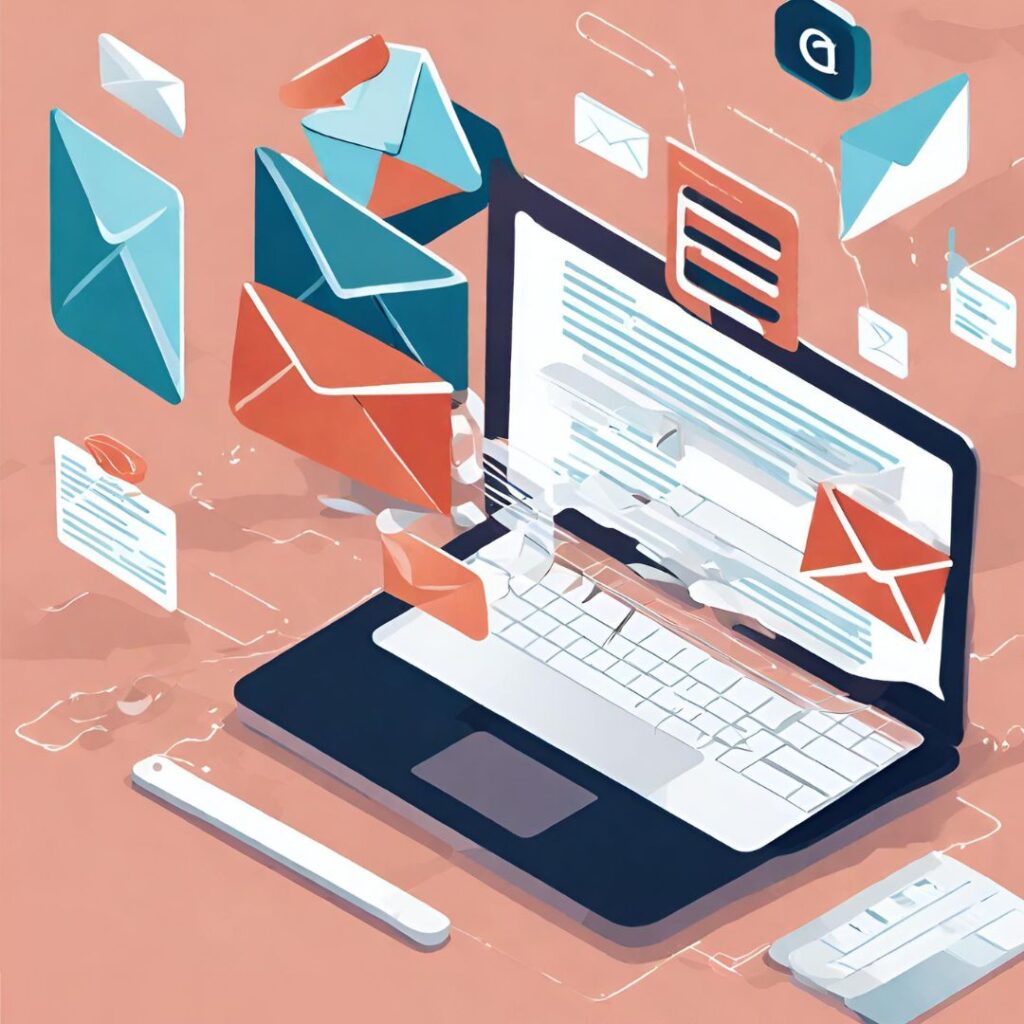
For affiliates aspiring to maximize their efficiency and earnings, here are proven strategies for effectively merging these two worlds.
Segment Your Audience
One of the major advantages of email marketing is personalization. Segment your email list according to specific criteria such as age, location, or interests to propose tailor-made affiliate offers. Targeted communication increases conversion rates and strengthens the relationship with your audience.
Value Content
Content is king, and in email marketing it reigns supreme. Include relevant, high-quality content that not only informs but also captivates your audience. Insert your affiliate links in a natural way, ensuring that they complement and enrich the content, rather than saturate it.
Monitoring and analysis
Use analytics to track the performance of your email campaigns. Evaluate open rates, clicks, and conversions to identify what resonates with your audience. Use these insights to refine your email marketing strategies and optimize the performance of your affiliate links.
A/B test
Experiment with A/B testing to identify the most effective headlines, content and calls to action. This will enable you to understand your audience's preferences and adjust your campaigns to maximize the effectiveness of integrated affiliate links.
Staying Compliant
Make sure you comply with regulations and ethical standards. Be transparent with your audience by clearly disclosing your affiliations. Trust and credibility are essential to building and maintaining a solid relationship with your audience.
Effectively integrating email marketing with affiliate marketing requires a strategic approach, focused on value and personalization. By merging these two strategies, affiliates can not only extend their reach but also build deeper relationships with their audience, boosting conversions and revenues. By continually adapting and refining your strategies, you can turn every email into an optimized conversion opportunity for your affiliate offers.
The importance of’ Email marketing 📨 in today's digital world
Various strategies have emerged, all promising to reach customers in an effective and targeted way. Yet, despite the rise of social media and influencer marketing, email marketing remains a solid and indispensable pillar for affiliate marketers.

A Personal and Direct Channel
One of the major strengths of email marketing lies in its ability to establish direct, personal communication with customers. Unlike social media platforms, where messages can be lost in a sea of content, emails land directly in the recipient's inbox. This enables an unparalleled level of personalization and targeting, where messages can be tailored to individual customer preferences and behaviors.
The Evolution of Email Marketing
Far from being static, email marketing has evolved to incorporate interactive elements, responsive designs and personalized content, transforming each email into a unique user experience. In affiliate marketing, this translates into increased opportunities to segment audiences, target specific niches and optimize messages to maximize conversions.
Measure and Optimize
Email marketing also offers the advantage of measurability. Marketers can track key metrics such as open rates, click-through rates and conversion rates to assess the performance of their campaigns. This ability to measure and analyze data in real time enables strategies to be adjusted and optimized for maximum ROI.
Despite the proliferation of new marketing channels, email marketing remains an effective and reliable strategy, particularly in the field of affiliate marketing. Its ability to personalize, target and measure makes it indispensable for marketers seeking to successfully navigate today's complex digital world. In an environment where competition is fierce and customer attention is fragmented, email marketing stands out as a proven tool for building and nurturing lasting, profitable customer relationships.
How can email marketing📨 be customized to promote affiliate products💰?

Let's explore effective strategies for personalizing email marketing and boosting conversion of affiliate products.
Understanding your Audience
The first step towards personalization is a deep understanding of your audience. Collect and analyze demographic, psychographic and behavioral data to create audience segments. Each segment will require a tailored message to resonate effectively.
Content customization
Create customized content based on the preferences and behaviors of each segment. Product recommendations, special offers and educational content need to be tailored to meet the specific needs of each audience.
Custom Topics and Contents
Use the recipient's name, integrate product recommendations based on purchase or browsing history, and adapt the tone according to the reader's profile.
Advanced segmentation
Go beyond demographic information. Segment your list according to buying behavior, product preferences, and level of engagement for increased personalization.
Deliverability Optimization
Make sure your emails land in the inbox and not in the spam folder. Optimize your subject lines, avoid overly promotional content and ensure mobile compatibility to improve deliverability.
Measurement & Analysis
Regularly evaluate the performance of your campaigns. Use analytics to measure open rates, click-through rates and conversions. Adapt your strategies based on insights to improve the effectiveness of future campaigns.
Personalized email marketing is a powerful lever for promoting affiliate products. By understanding and segmenting your audience, tailoring your messages and measuring your performance, you can maximize engagement and conversions. Personalization is not an option but a necessity for any affiliate wishing to transform their email marketing efforts into an effective and profitable revenue-generating machine.
Equip yourself with the tools and knowledge to personalize your email campaigns and watch your affiliate commissions soar, while delivering a valuable and relevant experience to your audience.
Email List Segmentation📨: An Essential Strategy for Optimizing Affiliate Marketing
One of the most powerful tools at your disposal is a segmented e-mail list. Segmentation enables you to tailor content to different segments of your audience, ensuring personalized, relevant communication.

We'll explore the importance of email list segmentation and how to implement it effectively.
Why is Segmentation Crucial?
Personalization
In an age where personalization is key, sending generic emails to your entire list can be counter-productive. Segmentation ensures that content is tailored and relevant to each segment, increasing open and conversion rates.
Commitment
Targeted messages better engage the audience. By addressing the specific needs and interests of each segment, you increase customer interaction and loyalty.
KING
A segmented list optimizes ROI. It reduces churn and increases conversions, making every email campaign more profitable.
Segmentation Methods
Demographics
Segmenting by age, gender, location or profession enables rapid personalization. For example, specific offers can be sent to people in a given geographic region.
Behavioral
Based on user actions such as previous purchases or pages visited, this method enables specific preferences to be addressed, increasing content relevance.
Psychographic
Segmenting according to attitudes, values and interests can help create emotionally resonant content, strengthening the connection between brand and consumer.
Commitment level
Identifying active and inactive subscribers can help create strategies to increase engagement or win back inactive users.
Implementing segmentation
Collect Data
Start by collecting relevant data about your subscribers. Be transparent and make sure you comply with data protection regulations.
Analyze and Segment
Analyze data and identify distinct patterns and homogeneous groups. Create segments based on this information.
Customize Content
Tailor your email content for each segment, ensuring that each message is relevant and engaging.
Measure and adjust
Monitor the performance of your campaigns and adjust your segments and content accordingly for optimum effectiveness.
Email list segmentation isn't just an advantageous strategy; it's a necessity in today's affiliate marketing. It enables precise, personalized and effective communication, increasing engagement, conversion and ROI. By integrating segmentation into your email marketing strategy, you position yourself for sustainable success in the competitive affiliate marketing landscape.
Strategies for creating content that resonates with your target demographic
Creating content that resonates with your target audience is key to generating conversions and maximizing revenue. Effective content is that which is aligned with the specific interests, needs and challenges of your audience.

Explore proven strategies for creating content that engages, informs and converts your target demographic.
The first step in creating relevant content is to gain an in-depth understanding of your audience. This means identifying :
- Demographics : Age, gender, location, etc.
- Psychographic : Interests, values, attitudes, etc.
- Needs and Challenges : What solutions is your target audience looking for?
Content customization
- Segmentation : Divide your audience into segments based on specific criteria to personalize your message.
- Personas : Create personas to represent your audience segments, and gear content to their specific needs.
Message adaptation
Tailor your message to resonate with each audience segment:
- Language : Use language and tone that speak to your audience.
- Visual Content : Integrate visual elements adapted to your audience's preferences.
Enhancing Quality
- Relevant Information : Provide useful and valuable information.
- Storytelling : Tell compelling stories to engage your audience.
Feedback and Adjustment
- Data analysis : Use analytics to understand how your audience interacts with your content.
- Adjustments : Make data-driven changes to improve content effectiveness.
Creating content that resonates with your target demographic is no easy task, but it's an essential element of successful affiliate marketing. By understanding your audience, personalizing content and valuing quality, you can create content that not only attracts, but converts and retains your audience. Don't forget to measure the effectiveness of your content and adjust your strategies accordingly for optimal results.
Navigating the Waters of Affiliate Marketing: Rules, Regulations and Ethics in the Era of the RGPD
In the dynamic affiliate marketing landscape, it's imperative for affiliates and advertisers to understand and comply with current regulations. This is all the more crucial with the introduction of stringent laws such as the General Data Protection Regulation (GDPR) in Europe.
Let's take a look at the legal and ethical aspects that shape the world of affiliate marketing and how to successfully navigate this regulated framework.
Rules and regulations at a glance
The GDPR, implemented in 2018, has brought significant changes to the way in which the personal data of EU and EEA citizens is collected, stored and processed. The same applies to any organization operating in these regions or processing data of residents of these regions. It emphasizes transparency, security and accountability, crucial aspects that every affiliate should understand.
Consent and Transparency
User consent is at the heart of the GDPR. Affiliates and brands must ensure that users are informed of how their data will be used and must obtain their explicit consent. For affiliate marketers, this means clear and transparent communication is essential.
Ethics and Integrity
Beyond legal compliance, ethics play a central role. Affiliates must adopt honest business practices, avoiding deception or manipulation. Integrity and trust are the basis of a solid relationship not only with partners, but also with consumers.
Protecting privacy
Protecting users' data and privacy is paramount. Affiliates must be vigilant to ensure that data is stored and processed securely, and that user confidentiality is always respected.
The Importance of Training and Education
To successfully navigate this regulated environment, training and continuing education are essential. Affiliates need to be up to date with the latest legal and regulatory developments, and understand how they impact their marketing strategies.
Affiliate marketing in the RGPD era requires careful attention to legal compliance and ethics. By being informed, transparent and respectful of user data, affiliates can not only comply with regulations but also build lasting relationships of trust with their audience and partners. In a world where privacy and data security are increasingly valued, an ethical and compliant approach is not only legally necessary, but also a significant competitive advantage in the world of affiliate marketing.
Resources and tools:
- TOP list of email marketing tools
- Active Campaign review: The best emailing tool?