Visit CPC (Cost Per Click) is one of the compensation models used in affiliate marketing, although it is less common than conversion-based models, such as CPA (Cost Per Acquisition). With CPC, The affiliate is paid every time a user clicks on an affiliate link, regardless of whether or not they make a purchase later on. This model offers unique opportunities for affiliates, but it also has certain nuances that must be understood in order to take full advantage of it.
What Is the CPC Model in Affiliate Marketing?
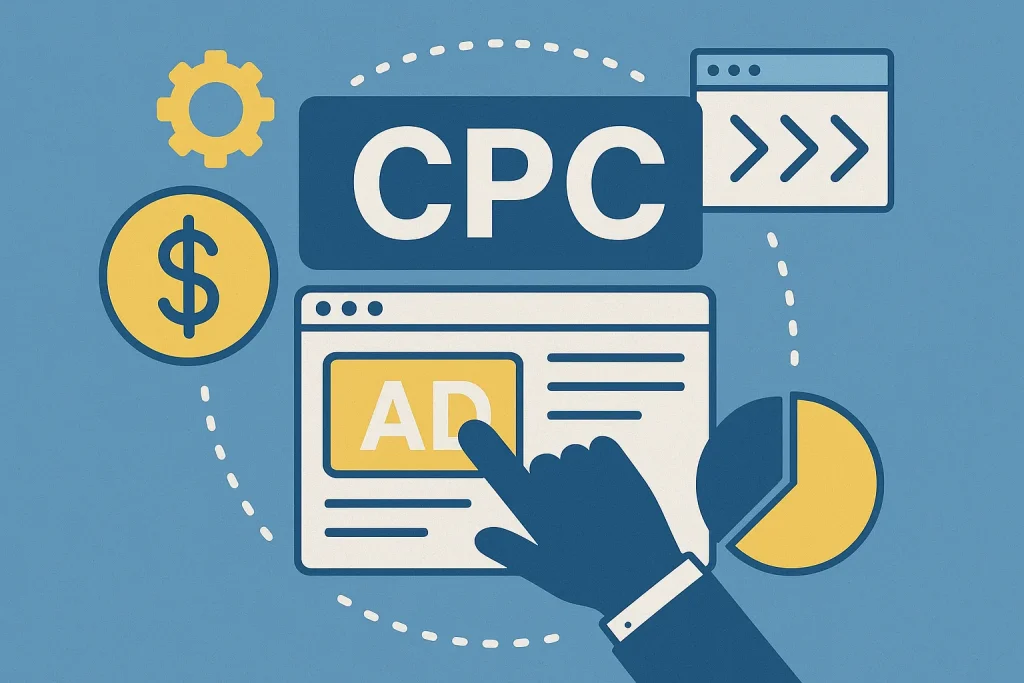
The CPC, or Cost Per Click, is a model in which an affiliate earns a commission every time a user clicks on their affiliate link. Unlike the CPA model, where the affiliate is paid only if a sale or a specific action is completed (such as signing up for a newsletter or purchasing a product), the CPC model rewards the affiliate solely for driving traffic to the merchant’s website.
Example of how it works:
- You create content (a blog post, video, or social media post) that includes an affiliate link.
- A user clicks on this link and is redirected to the advertiser's website.
- Whether or not the user makes a purchase, you earn a commission simply for generating that click.
The amount paid per click can vary, but it generally ranges from a few cents to several euros, depending on the niche and the level of competition in the industry.
Benefits of the CPC Model for Affiliates
The CPC model offers distinct advantages over other affiliate models:
✅Ease of Conversion: One of the biggest advantages of CPC is that The required action is much simpler. Unlike CPA, where the user must make a purchase or complete a specific action, with CPC, all the user has to do is click. This significantly lowers the barrier to conversion, which can result in a higher volume of clicks.
✅Income even without sales: With the CPC, You don't need to rely on sales to get paid. This is particularly useful in industries where it can take time for leads to convert into sales (such as high-priced products or complex services). You get paid simply for generating interest.
✅Suitable for High-Traffic Content: If you have a blog, a YouTube channel, or a website with high traffic, CPC can be a great way to monetize your visitors, even if they aren't ready to buy yet.
Disadvantages of the CPC Model
Despite its advantages, the CPC model also has some limitations that are important to be aware of:
❌Lower Commissions: In general, The amounts per click are low. Commissions can range from €0.10 to €1, depending on the industry. Compared to CPA or CPL (Cost Per Lead) models, where commissions are often higher, CPC may seem less lucrative at first glance.
❌High Traffic Volume Required: For CPC to be truly profitable, a high volume of traffic is often necessary. Small audiences may generate too few clicks to generate substantial revenue. CPC is therefore best suited for affiliates with a large or highly engaged audience.
❌Less Correlation with Content Quality: With CPC, audience quality isn’t as important as it is in other models, because the affiliate is paid per click rather than for the final conversion. This can sometimes lead to less ethical practices, such as generating unqualified clicks, but it can also reduce the perceived value of the recommendation by affiliates.
Examples of Industries That Use CPC
Although less common than the CPA, the CPC is often used in certain specific sectors:
- Display Advertising : Advertising networks such as Google AdSense and banner ads on blogs make extensive use of CPC.
- Comparison Websites : Websites that compare prices of products or services use CPC to drive clicks to e-commerce sites.
- Niche markets with long purchasing cycles : For example, the insurance or financial services industry can use CPC, since users search, compare, and click before making their final decision.
How to Succeed in CPC Affiliate Marketing?
To maximize your earnings with the CPC model, here are a few strategies to follow:
Choose the Right Affiliate Programs: All the affiliate programs do not offer the CPC model. Look for programs that specialize in sectors that pay per click, such as price comparison sites, finance, or certain e-commerce niches. Also, compare click-through rates to choose the programs that offer the best commissions per click.
Optimize Traffic and Engagement: Since CPC is based on the number of clicks, Optimizing your traffic is crucial. Focus on SEO to generate organic traffic, use social media to attract visitors, and boost visitor engagement by offering interactive content, compelling call-to-action buttons, and promotions.
Create Relevant Content: Even though the CPC model does not depend directly on sales, it is essential to offer interesting and useful content to capture your visitors’ attention and encourage them to click on your links. For example, buying guides, and product comparisons, or tool testing are formats that naturally encourage clicks.
Test and Track Your Performance: Use analytics tools to track the performance of your affiliate links. Try different approaches (link placement, content format, product types) to determine what generates the most clicks and continuously improve your strategy.
Avoid Clickbait Tactics The CPC model can be vulnerable to abuse (such as artificially inflating clicks). Not only does this go against affiliate ethics, but it can also result in penalties from affiliate platforms. Focus on generating qualified clicks by providing real value to your audience.
CPC vs. CPA Comparison
To help you understand when to choose CPC or another model, such as CPA, here are a few points of comparison:
| Criteria | CPC | CPA |
|---|---|---|
| Compensation | Per click, regardless of whether a purchase is made | After a conversion (sale, registration) |
| Difficulty | Easier to get, since it only takes one click | More difficult, because it requires a complete action |
| Commissions | Lower cost per click | Higher commissions per conversion |
| Required volume | Requires high traffic | Can be profitable with moderate traffic |
The CPC model in affiliate marketing offers a an interesting alternative compared to other compensation models, particularly for affiliates capable of generating a high volume of traffic. If you run a high-traffic website or blog, or if you target an engaged audience, CPC can help you easily monetize your traffic, even without direct conversions to sales.
However, for this model to be truly profitable, it’s essential to optimize your content and diversify your traffic channels to maximize your clicks while remaining ethical and transparent with your audience.